The heat ladder, row by row
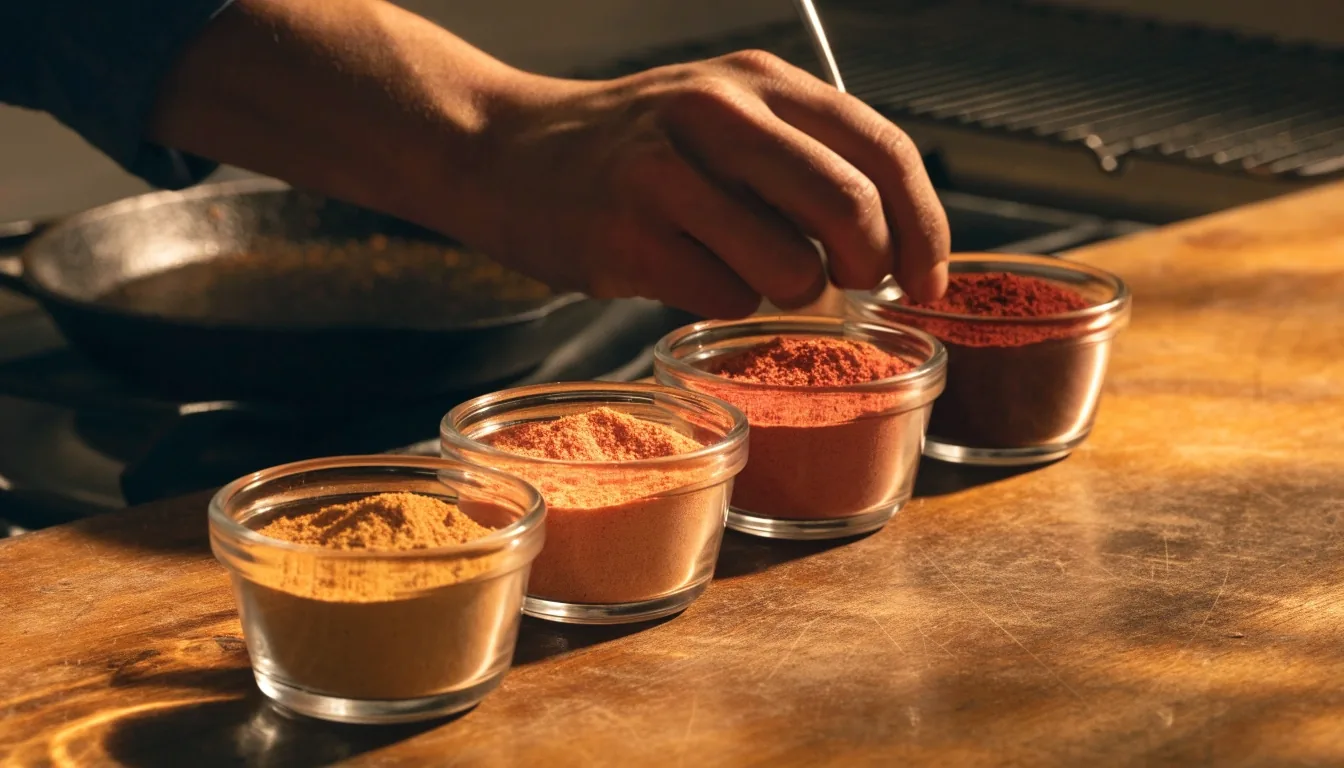
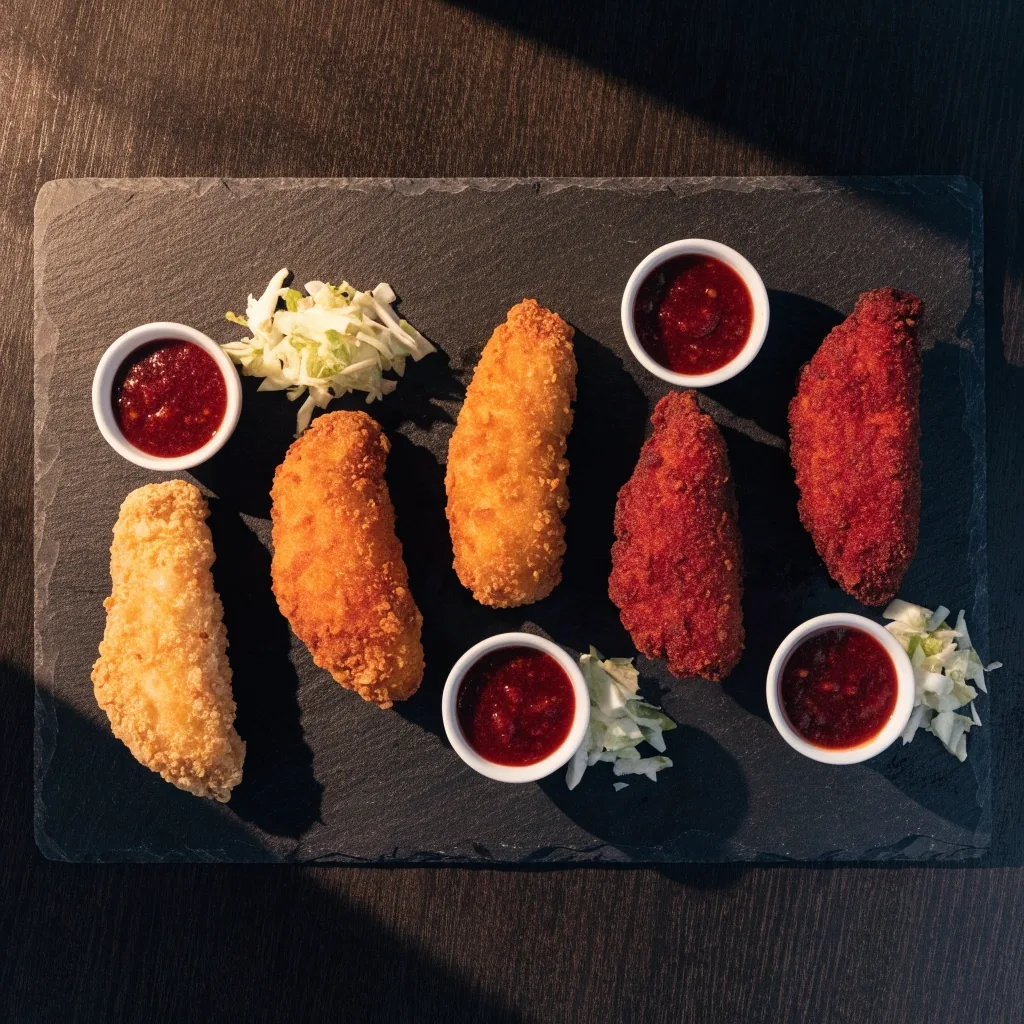
Nashville hot chicken heat levels are not a single dial. Each rung changes the spice blend, the oil temperature at the finish, and which sauce goes on the side. The rows below show how the ladder is taught in the course, from the mildest starter to the Reaper finish.
Sauces that balance the burn
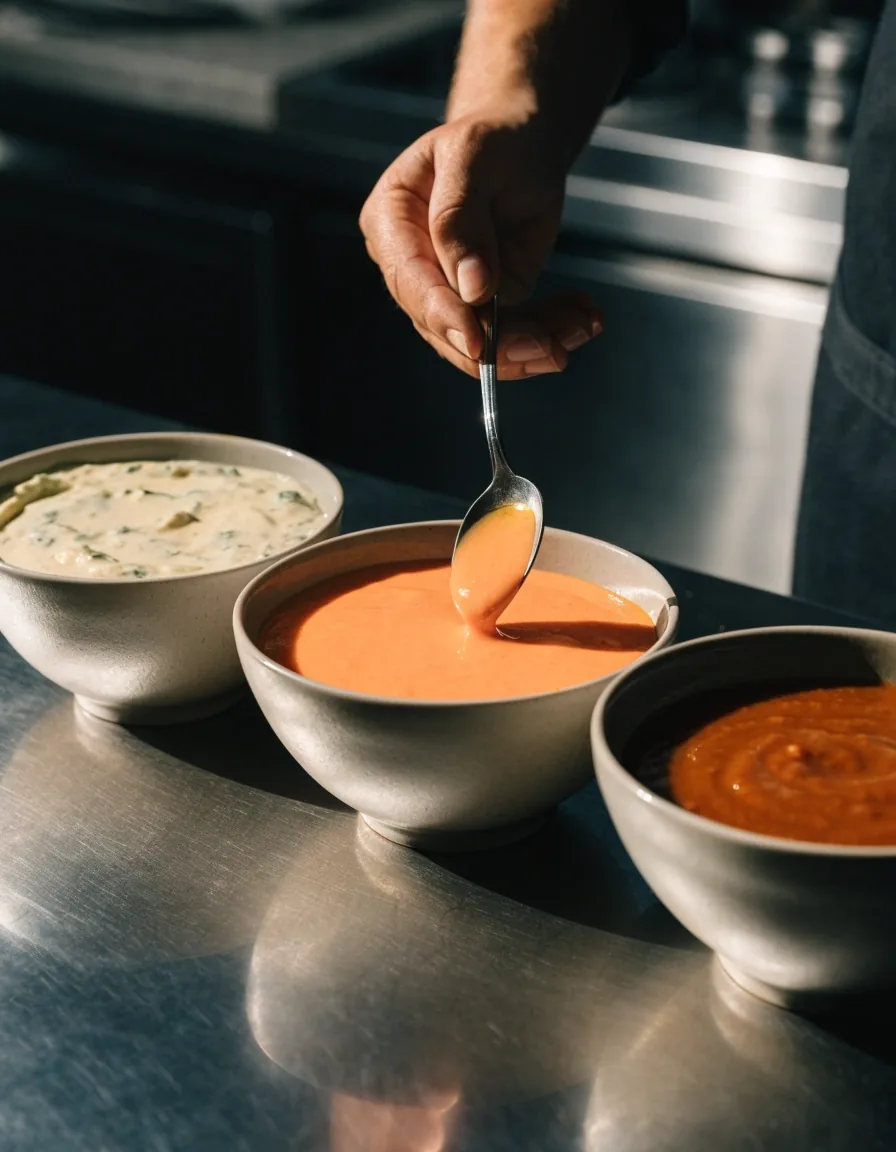
Heat without a cooling side is just pain. Every level on the ladder ships with a partner sauce, and the course teaches all three from scratch — no jar shortcuts, no bottled blends. These are the sauces that make dave hot chicken style tenders and sliders work at the table.
Comeback sauce
Tangy, a little sweet, built on mayo and chili sauce. It is the house answer to Hot and Extra hot, and the sauce most students say they will keep making after the course ends.
Spicy chili aioli
Garlic forward, creamy, with the chili heat folded in rather than poured on top. It is the default dip for tenders and the spread that goes under the lid on a slider.
Buttermilk ranch
Herb heavy and thin enough to coat a wing. The cooling lane for Reaper, and the sauce to keep in the fridge if you cook the ladder for a crowd.
How the blend climbs
The five levels are one recipe with five adjustments. Knowing which knob to turn is the difference between a hot tender and a bitter one — and it is the part most home cooks get wrong.
Paprika and a light cayenne touch, whisked into warm oil. Built to convert anyone who says they do not like heat.
Smoked paprika goes in and the sugar drops slightly, so the finish reads warm rather than sweet.
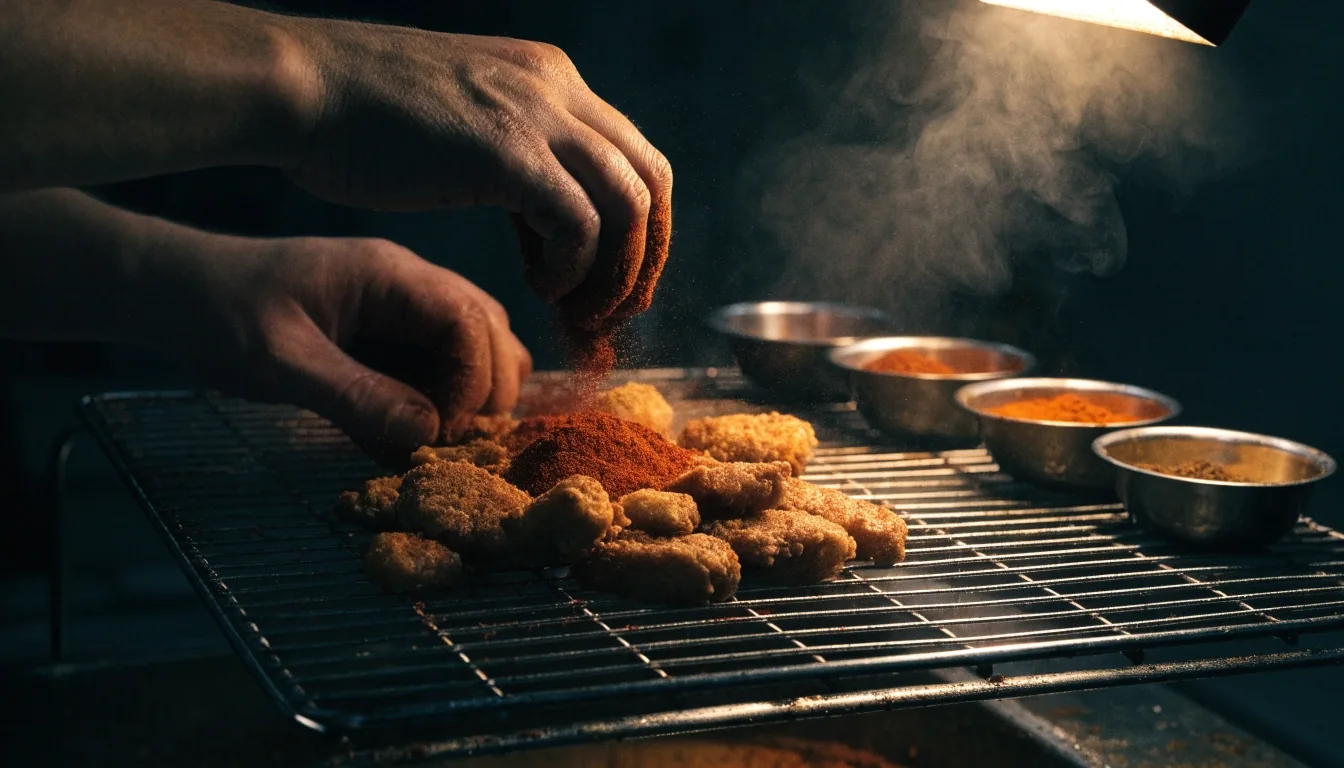
Cayenne is whisked straight into the frying oil at the end, which is what gives the crust its color and its bite.
Ghost pepper enters the blend and the sugar is pulled back further. Balance matters more here than volume.
Carolina Reaper mash is finished last, off the heat, so the aroma survives and the burn stays clean.
Reaper hot chicken is the end of the ladder, not the entry fee. The course teaches you to cook M01 through M05 in one session so you can taste where each adjustment lands, then pick the level you want to serve at home.
Choosing your spice path
You do not have to commit to one level for the whole course. Most students start at Medium, cook the ladder once, then decide where their kitchen actually lives. Here is how to read your own tolerance honestly.
See how the course runsStart at Mild if…
You are cooking for family or a mixed table, or heat usually drowns the flavor of the food for you.
Start at Medium if…
You like a warm finish and want to taste the spice blend before you push it. This is where most students begin.
Start at Hot if…
You already eat cayenne regularly and want the crust color and bite that comes with the oil finish.
Start at Extra hot or Reaper if…
You have cooked with ghost pepper or Reaper before and you keep ranch on the counter while you eat.
Cooking the ladder for a group
Fry one batch of tenders at a time and toss each batch at a different level. Wings take the higher rungs well because the skin holds more sauce; sliders usually land better at Mild or Medium where the bun and slaw can do their job. Keep the sauces in separate bowls so nobody crosses lanes by accident.
Questions about the ladder
The questions that come up most often before students pick a level. If yours is not here, send it over and we will answer it directly.
Ask us directlyDo I need to cook Reaper to finish the course?
No. The ladder is taught as five variations of one recipe, and you can stop at whichever level you want to serve. Reaper is included so you can taste the top of the range once, not so you have to live there.
Are the sauces made from scratch or from a bottle?
From scratch. Comeback sauce, spicy chili aioli, and buttermilk ranch are all built in the course with ingredients you can buy at a normal grocery store. The lesson notes explain what each ingredient is doing so you can adjust the sauces to your own taste.
Does the heat level change the cooking method?
The brine and the dredge stay the same across the ladder. What changes is the spice blend, how much sugar it carries, and when the chili goes in — into the warm oil, into the mash, or into the sauce on the side. Those timing choices are what separate a clean burn from a harsh one.
Will extra hot or Reaper ruin the flavor of the chicken?
Only if you build the blend without balance. Sugar, salt, and acid are what keep the top of the ladder readable, and the course covers how to adjust each of them. Cooked that way, Reaper still tastes like chicken with spice, not like heat with chicken attached.
Pick your level and start cooking
The flagship course covers juicy tenders, sliders, and wings across the full ladder from mild to Reaper, plus the three sauces that make daves hot chicken style plates work at home. Read the enrollment details, then choose the departure that fits your kitchen.
915 Spice Kitchen Boulevard, Building B
Memphis, TN 38103, USA
+1-901-555-0844
[email protected]
Mon–Fri 9:00 AM – 6:00 PM
Sat 10:00 AM – 4:00 PM
Sun closed