The brine and the dredge
Why a buttermilk-and-pickle-juice brine keeps tenders juicy, how to season the flour in layers, and how to press the dredge on so the crust stays put through frying.
915 Spice Kitchen Boulevard, Building B, Memphis, TN 38103
Monday–Friday: 9:00 AM – 6:00 PM
Flagship online course
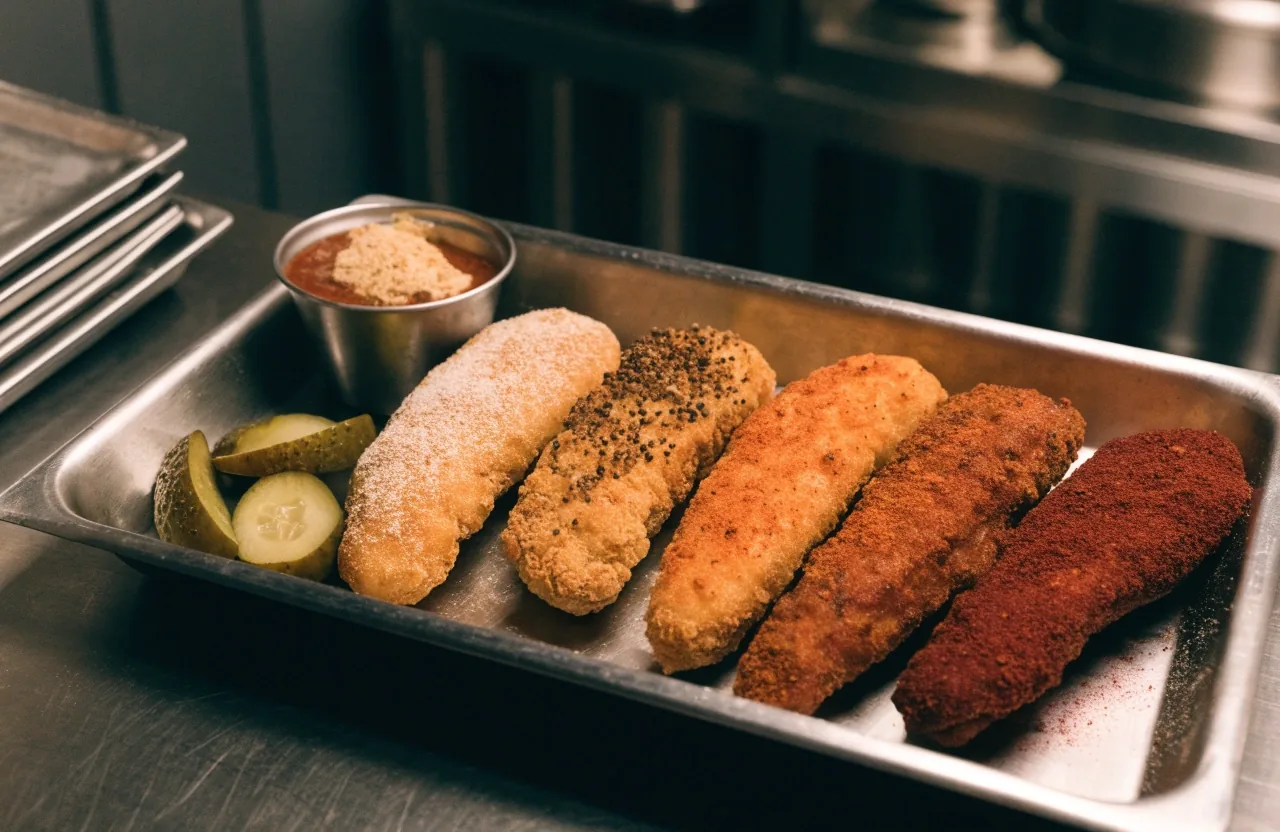
A flagship cooking course for home cooks: crispy Nashville hot chicken tenders, sliders, and wings, with signature sauces and a full heat ladder from mild through Reaper.
This page walks through what the flagship course covers so you can decide whether the curriculum fits your skill level and what you want to cook at home. Each module below is a real chapter with its own techniques, timings, and tasting notes. You will work through tenders, sliders, and wings, learn how the signature sauces are built, and climb a heat ladder that starts mild and finishes at Reaper. If you are weighing whether to join, read the module rows in order; each one names the cut, the method, and the skill you will leave with.
How the course is organized
Six modules, in the order they appear in the course. The day strip shows the week the module's technique is best practiced, because brining, dredging, and resting behave differently depending on how much time you have before dinner.
Why a buttermilk-and-pickle-juice brine keeps tenders juicy, how to season the flour in layers, and how to press the dredge on so the crust stays put through frying.
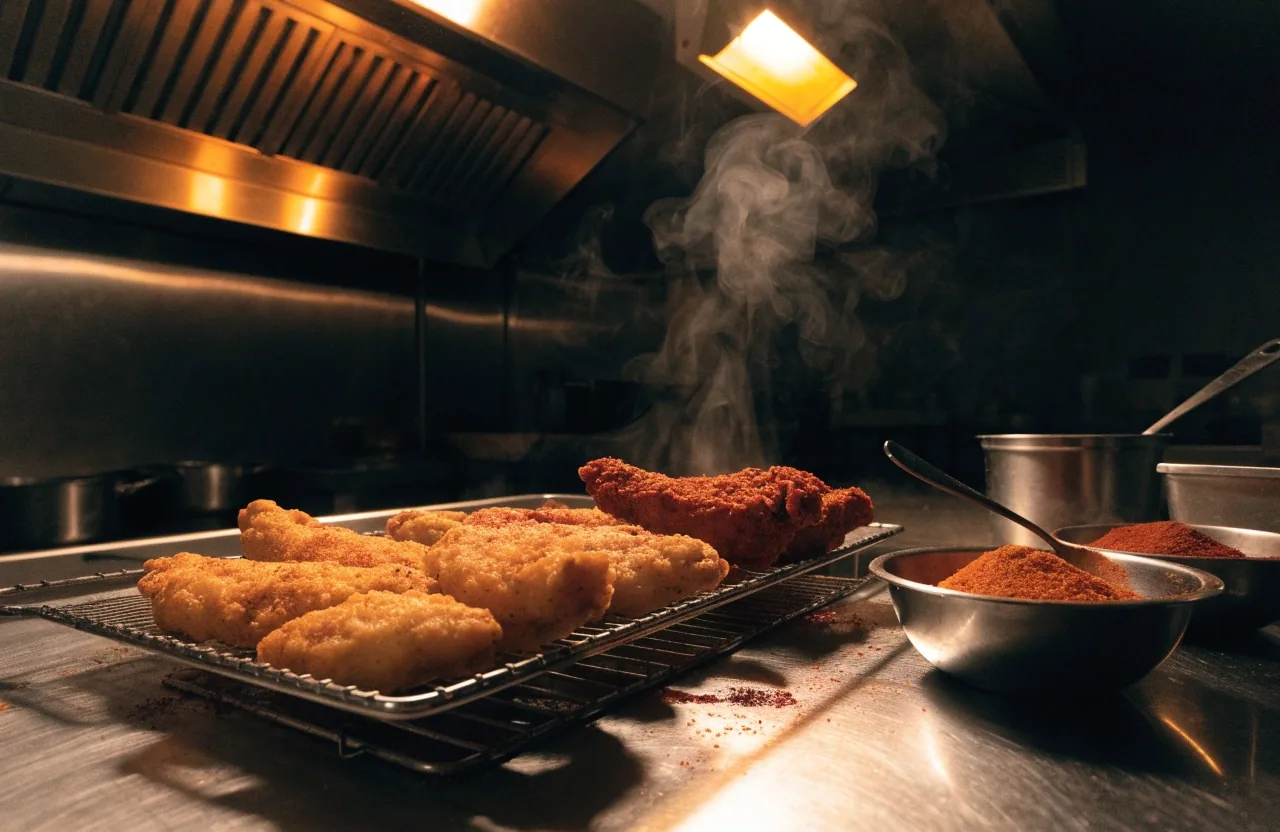
Oil temperature, batch size, and the moment to pull the basket. Tenders and wings want different timing even though they share a fryer; this module covers both and how to hold finished pieces without steaming the crust.
Comeback sauce, honey glaze, and the Nashville spice oil that carries most of the heat. Each sauce is built from a base you can keep in the fridge, with a ratio sheet so you can dial thickness and sweetness to your own taste.
Toasting brioche cut-side down, stacking a tender so it stays put, and adding the slaw and pickles that cut the fa. This is where the pieces you fried in module two become a sandwich that holds together.
Mild, medium, hot, and Reaper, built from the same base with different chili blends and infusion times. You will learn to taste a level, note where it sits, and adjust without losing the flavor underneath.
Kale slaw, quick pickles, and a simple plating routine. The last module is about cooking the whole meal so the tenders hit the table hot, and about planning a batch for a crowd without losing the crust.
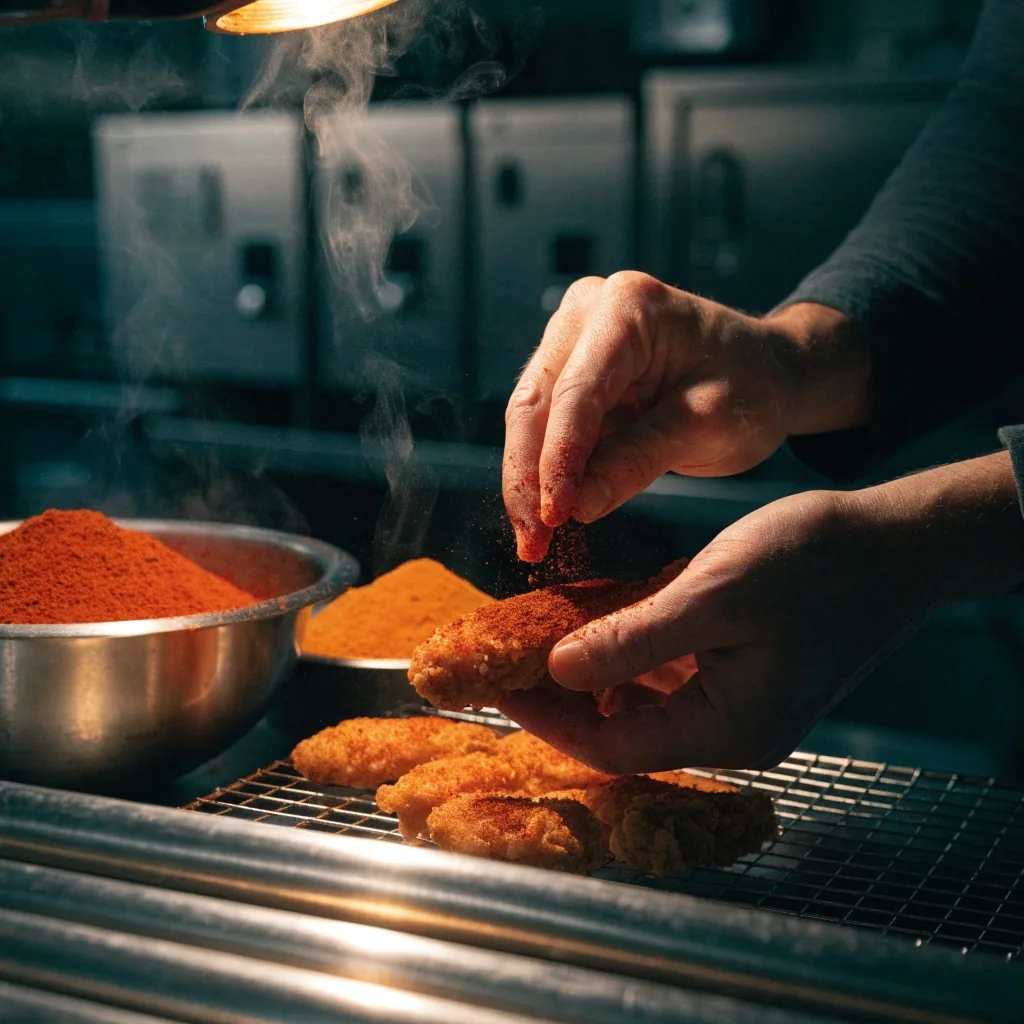
The course assumes a normal home kitchen: one pot of oil or a countertop fryer, a whisk, a wire rack, and a sheet pan. You do not need a commercial range, a proofing box, or a dedicated fry station. What you do need is the willingness to cook the same tender three or four times until the crust behaves the way you want, because frying rewards repetition more than it rewards equipment.
Each module opens with what to buy and what to skip. The ingredient lists stay short on purpose: chicken, buttermilk, pickle juice, flour, a handful of spices, and the chilies for whichever heat level you are building. Where a step matters more than the ingredient, the lesson says so, and where a shortcut is fine, it says that too. If you have cooked fried chicken before, module one will feel quick; if you have not, it is the one to replay.
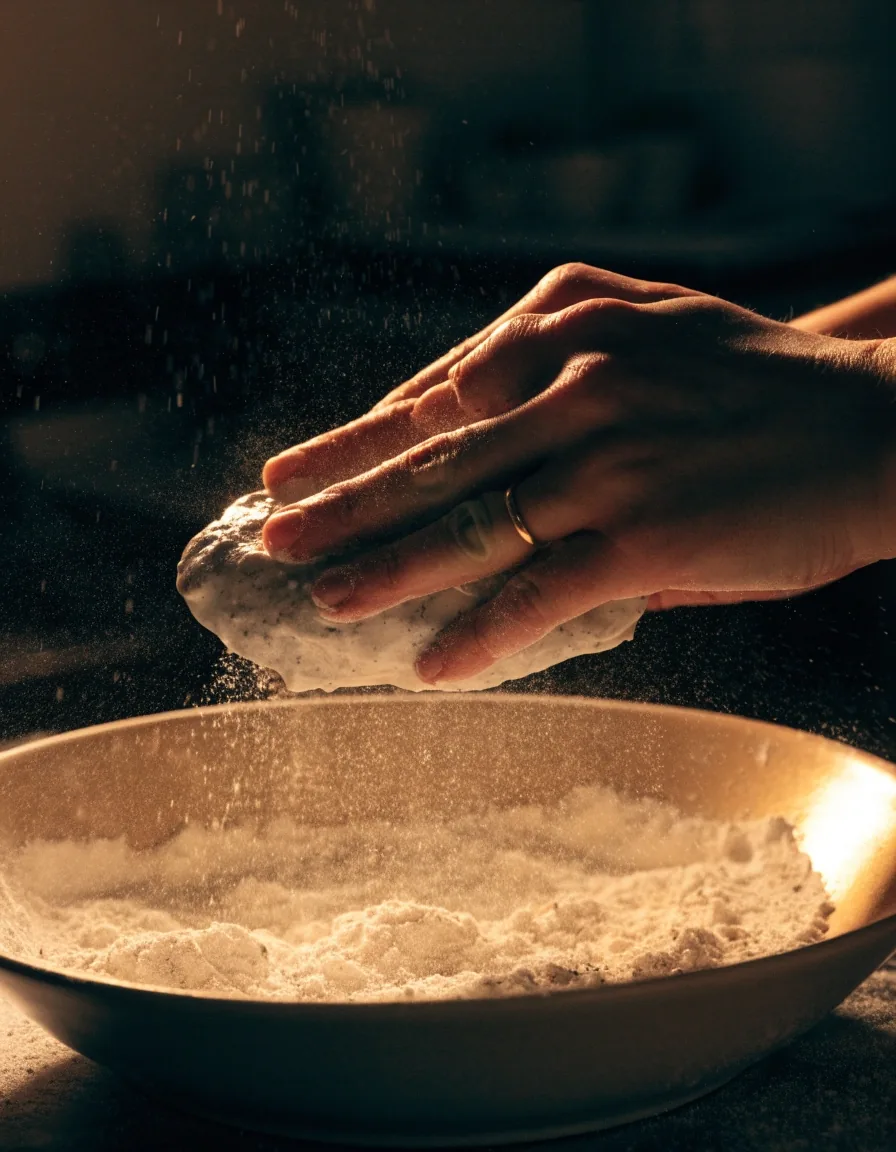
Dredging by hand, so the seasoned flour reaches every fold of the tender before it hits the oil.
Four levels, one base sauce. The difference is the chili blend and how long it steeps. This is the comparison the course asks you to taste through before you pick a favorite.
Mild
Paprika and a little brown sugar carry the sauce, with cayenne held back. Good for a first batch and for anyone at the table who wants flavor without the burn.
Medium
Cayenne steps forward and the honey glaze rounds it out. The heat arrives after the crust, which is the point: you taste the chicken first.
Hot
The classic blend: cayenne, a little smoked paprika, and hot oil poured over the spice so it blooms. This is where most people land after tasting all four.
Reaper
Reaper chili joins the blend at a measured dose, with a cooling slaw and pickle on the plate. The lesson covers how to taste it safely and how to bring the heat back down if you overshoot.
Every level uses the same sauce base, so you can build one batch and split it four ways to compare. Full sauce recipes and the ratio sheet live in the heat and sauces chapter of the course.
Across the six modules you cook tenders, sliders, and wings, and you build the sauces that go with them. Tenders come first because they teach you the crust without the bone. Wings come next because they ask for a different fry time and a little more attention at the end. Sliders bring the pieces together with the bun, the slaw, and the pickles.
By the last module you can put a full plate on the table: hot chicken tenders at your chosen heat level, a slider or two, a bowl of kale slaw, and quick pickles you made the same day. The course finishes with a batch plan so you know how to cook for four people without the last pieces going cold while the first ones get eaten.
The course is self-paced and built so you can finish a module in one cooking session. Lessons are short videos with written steps underneath, so you can read ahead or follow along at the stove. Every module ends with a practice task and a short note on what to look for when it goes right and what to check when it does not.
No. A heavy pot with a few inches of oil and a thermometer works for every recipe, and the course includes notes on holding temperature on a normal stovetop. A countertop fryer is convenient if you already have one, but nothing in the curriculum requires it.
Reaper chili is handled with care in the module: gloves for the powder, a measured dose rather than a free pour, and a cooling slaw and pickle on the plate. The lesson walks through how to taste a small amount first and how to bring the heat back down if a batch lands hotter than you wanted.
Start at module one and cook it twice before moving on. The brine and dredge module covers the parts that trip up first-timers, including why the coating slides off and how to tell the oil is ready without guessing. Nothing later in the course assumes you already know how to fry.
It is self-paced. Most people cook one module a week and finish in about six weeks, but you can move faster if you have the time or slower if you only cook on weekends. Access does not expire, so a module you skip today is still there when you come back to it.
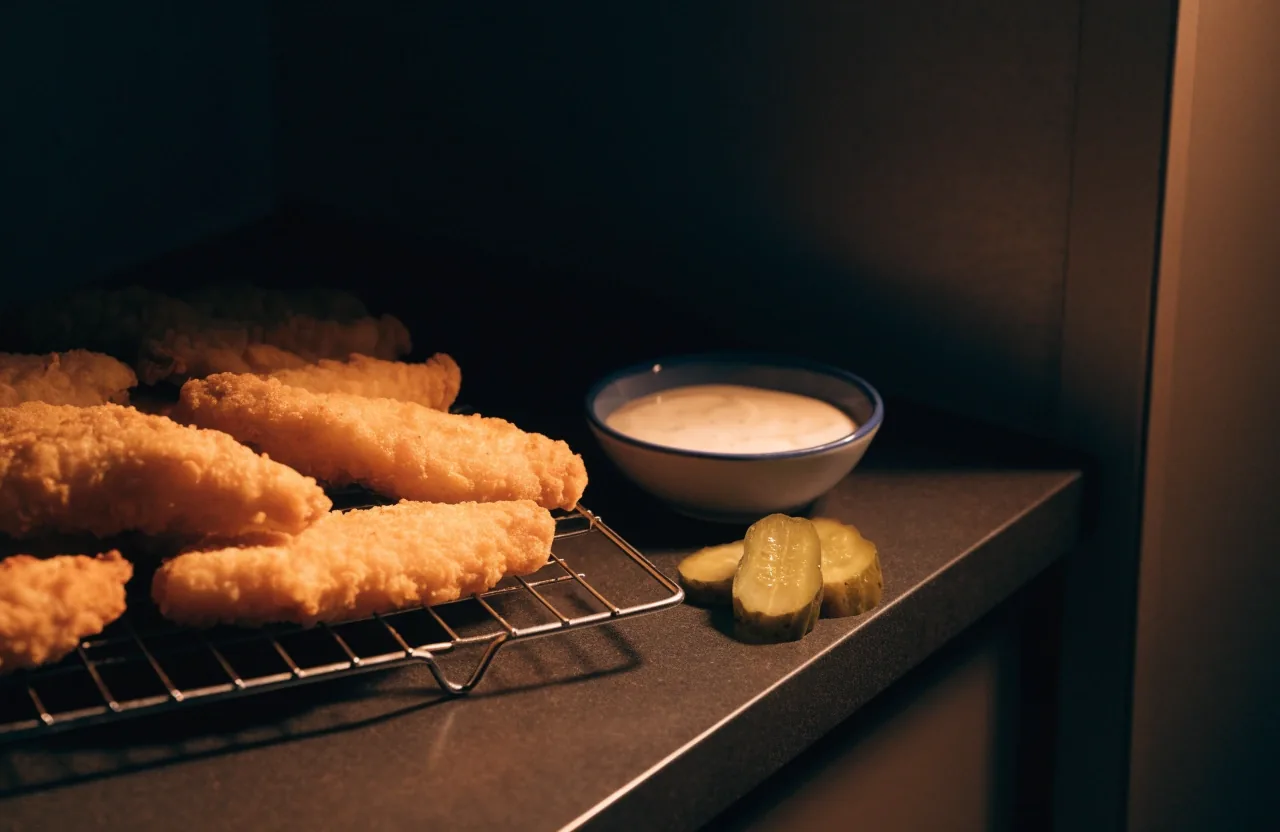
Yes, and the last module is built around it. You will plan the fry in batches, hold finished pieces on a rack in a warm oven, and time the slaw and pickles so the whole plate comes together at once instead of in waves.
Enrollment opens the full six modules, the sauce ratios, and the heat ladder notes. If you still have a question about the curriculum or your kitchen setup, reach out before you commit and we will tell you plainly whether the course fits.
Course contact
Dave's Hot Chicken Masterclass
915 Spice Kitchen Boulevard, Building B
Memphis, TN 38103, USA
Monday–Friday: 9:00 AM – 6:00 PM
Saturday: 10:00 AM – 4:00 PM
Sunday: Closed